
Houston turf service
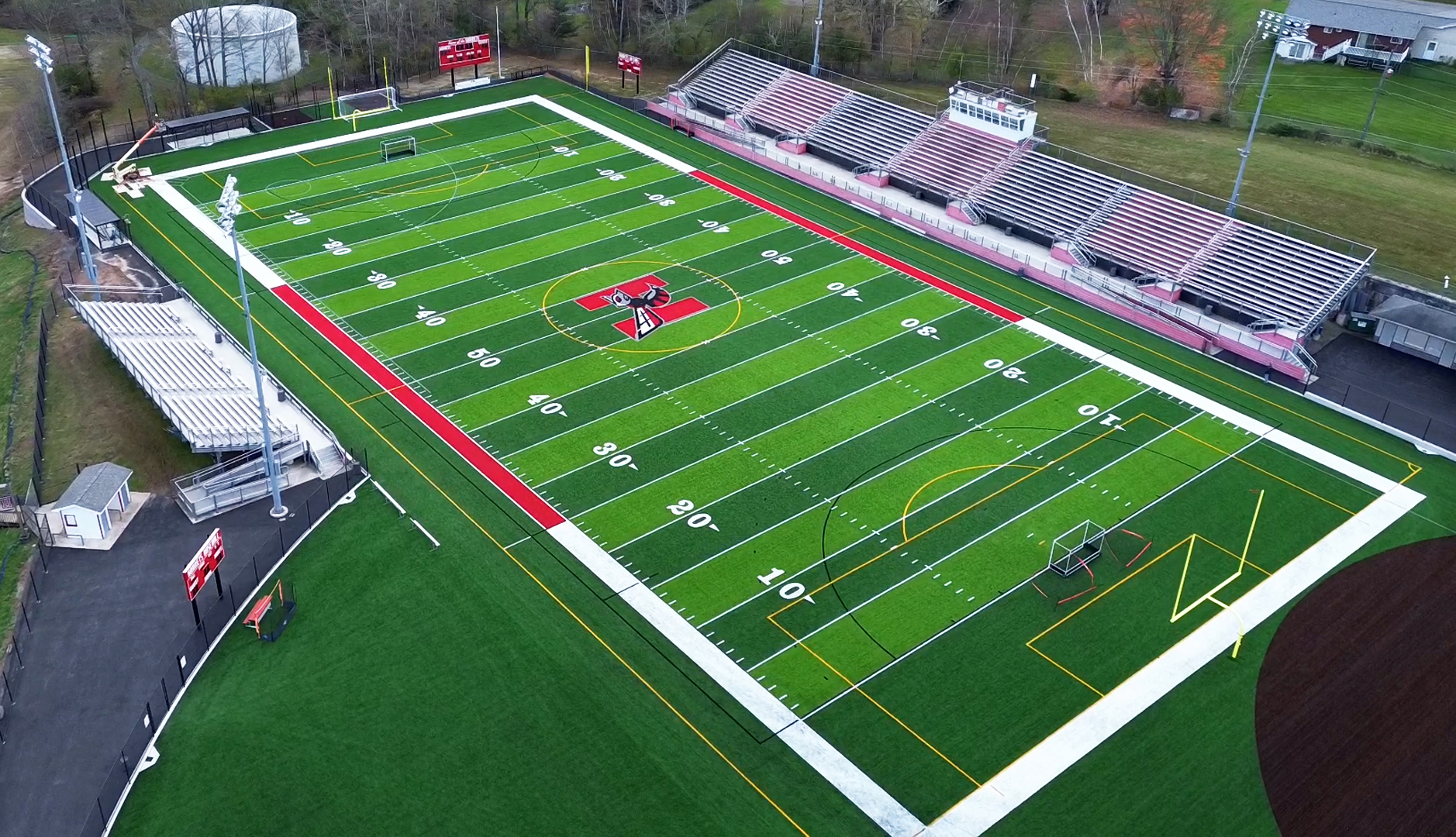
Sports Field Turf Installation in Houston, TX
Athletic facilities, schools, and park districts across Houston's outer-loop corridor are converting natural grass fields to high-performance synthetic turf that handles Houston heat, clay drainage challenges, and year-round scheduling demands.
Service Overview
Sports Field Turf for Outer-Loop Houston Athletic Facilities
Natural grass sports fields along Houston's Beltway 8 corridor face a combination of challenges that make year-round athletic programming nearly impossible: clay soil that compacts and drains poorly, summer heat that kills grass under heavy use, Houston's concentrated spring rainfall that turns fields to mud, and the scheduling pressure of school programs, community leagues, and tournament hosting that natural grass recovery periods simply can't accommodate.
Sports field turf installation addresses all of these constraints simultaneously. A properly installed synthetic field handles the drainage load of Houston's intense rainfall events, stays playable through summer heat cycles, and supports triple the annual playing hours of a natural grass alternative without recovery periods between uses. For Cy-Fair and Klein school districts, outer-loop parks departments, and private athletic facilities, synthetic turf fundamentally changes what their fields can do.
Artificial Turf of Houston installs sports field turf systems for football, soccer, lacrosse, baseball, and multi-use athletic applications. We work with leading manufacturers whose products meet FIFA, NFL, and NCAA standards for competitive play, and we build the sub-base and drainage systems that make those surface performance characteristics achievable in Houston's specific soil and climate conditions.
Benefits
Sports Field Turf Benefits for Houston Athletic Programs
Year-Round Field Availability
Natural grass fields in Houston's climate require extended recovery periods after heavy use or weather events. Synthetic turf supports continuous scheduling — practice in the morning, game in the evening, tournament all weekend — without surface degradation.
Consistent Playing Surface
Synthetic field turf provides uniform traction, ball roll, and surface firmness across the entire field throughout the season. No bare patches, no muddy zones, no divot areas near goal mouths or high-traffic zones.
Houston Clay Drainage Solution
Houston's black clay soil is the primary reason natural grass sports fields fail in this market. Synthetic turf installed over a properly engineered sub-base with integrated drainage moves storm water at rates clay soil simply cannot match.
Reduced Annual Maintenance Budget
Eliminating turf replacement, overseeding, irrigation, aeration, and chemical treatment cycles from the annual maintenance budget produces meaningful cost savings that offset the initial installation investment over a ten to fifteen year horizon.
Performance Standards Compliance
Our sports field systems are installed with products that meet or exceed governing body standards for athletic performance — important for programs hosting sanctioned competition and for insurance and liability considerations.
Expanded Tournament Hosting Capacity
Multi-day tournament events that would damage or require closure of natural grass fields can be hosted on synthetic turf without concern for surface condition. This expands revenue opportunities for facilities that host competitive events.
Process
Sports Field Turf Installation Process
Field Assessment and Program Requirements
We evaluate the existing field conditions, assess soil and drainage characteristics, and document the athletic programs using the facility — sport types, use intensity, and performance requirements that drive system specification.
Sub-Base Engineering
Sports field sub-base design is more complex than residential applications — drainage gradient, aggregate depth, and drainage outlet design are engineered for the field size and Houston's rainfall volumes. This is documented engineering, not rule-of-thumb estimates.
Excavation and Drainage Infrastructure
Existing surface and organic material are removed. Drainage infrastructure — perforated pipe systems, catch basins, or French drain networks — is installed before base aggregate is placed.
Aggregate Base Compaction
Base aggregate is placed, graded to engineered slopes, and compacted to specification. Sports field base construction is a multi-layer process with compaction testing at each stage.
Turf, Infill, and Field Marking
Sports turf rolls are placed and seamed. Performance infill is installed to specification and power-brushed. Field markings are applied using in-yarn colored turf or paint, depending on the installation type.
Applications
Sports Field Applications in the Outer-Loop Corridor
Soccer and Multi-Purpose School Fields
Cy-Fair ISD, Klein ISD, and Spring Branch ISD schools converting natural grass into synthetic multi-use fields that support soccer, football, lacrosse, and physical education programs year-round.
Community Park Athletic Fields
Houston Parks and Recreation Department and Harris County Precinct parks in the outer-loop area replacing high-use natural grass fields that can no longer support community league scheduling demands.
Private Athletic Club Facilities
Soccer clubs, football academies, and multi-sport training facilities along the outer-loop corridor converting primary training surfaces to synthetic turf to support year-round programming.
Church and Youth League Fields
Community league and church athletic programs in the Beltway 8 corridor that need practice and game surfaces without the ongoing maintenance burden that natural grass requires at their budget levels.
Baseball and Softball Infield Turf
Partial field conversions covering infield areas that take the highest use intensity — outfield natural grass with synthetic infield is a common upgrade for community baseball and softball facilities.
Indoor Facility Portable Turf
Portable and semi-permanent synthetic turf systems for indoor training facilities, warehouse gyms, and covered practice spaces across Houston's outer-loop commercial corridor.
Why This Site Frames It This Way
Why Artificial Turf of Houston for Sports Fields
Engineered Sub-Base for Houston Conditions
Sports field drainage in Houston's clay soil requires engineered sub-base design, not residential installation practices scaled up. We document the drainage engineering and base specifications for every sports field project.
Performance Product Specification
We specify sports turf products with the fiber technology, infill configuration, and backing systems appropriate for the specific sport and use intensity. Athletic applications require different product specifications than residential or commercial landscaping.
Governing Body Standard Awareness
We work with products that meet FIFA, NFL, NCAA, and applicable governing body standards for competitive athletic surfaces. This matters for programs hosting sanctioned competition.
Facility Operations Coordination
Sports field installations at active athletic facilities require careful coordination around practice and game schedules. We develop phased installation plans that minimize program disruption.
Long-Term Value Modeling
We help athletic program administrators understand the full cost comparison — installation versus the natural grass maintenance, replacement, and lost-use costs over a ten to fifteen year horizon. The economics typically favor synthetic turf clearly.
FAQ
Sports Field Turf Questions
What playing surface standards do your sports field systems meet?
We specify products that meet or exceed applicable governing body standards depending on the sport and competition level — FIFA Quality or FIFA Quality Pro for soccer, NFL standards for football, and equivalent standards for other sports. We provide compliance documentation for programs that require it.
How does synthetic field turf handle Houston's storm drainage requirements?
Sports field drainage is engineered specifically for the field size and Houston's design rainfall intensity. We install perforated pipe drainage networks, appropriate catch basin configurations, and engineered sub-base systems that move water at rates clay soil drainage cannot approach. Fields are designed to drain to playable condition within hours of a significant storm.
How long does a sports field installation take?
Timeline depends on field size, complexity, and drainage infrastructure requirements. Small practice field conversions may complete in one to two weeks. Full competition field projects with extensive drainage infrastructure typically run three to six weeks. We develop detailed schedules during the scoping process.
What is the expected lifespan of a sports field turf installation?
Athletic field turf systems typically last eight to twelve years under heavy use before the performance fibers show significant wear. Moderate-use fields can extend this to fifteen years. Base and drainage infrastructure, built correctly, outlasts multiple turf surface replacements. We design bases with long-term durability in mind.
Can your field systems handle multiple sports on the same surface?
Multi-sport configurations are standard for outer-loop school and community facilities. We design field layouts with multi-sport line marking packages and specify infill configurations that support the performance requirements of the primary sports in use.
What maintenance does a synthetic sports field require?
Regular grooming to redistribute infill and maintain pile orientation. Periodic infill top-up as it migrates over time. Annual performance testing for facilities that host sanctioned competition. Cleaning protocols appropriate to the sport. Significantly lower annual cost and time commitment than natural grass maintenance cycles.
Service Areas
Sports Field Turf Installation is routed through Houston and the surrounding local pages.
The service template stays tied to the Houston route stack, so supporting city pages and service pages reinforce each other instead of standing alone.
Need a quote for this service?
Build a Better Athletic Surface
Artificial Turf of Houston installs sports field turf for schools, parks, athletic clubs, and community facilities across the outer-loop corridor. Tell us about your facility and program requirements.