
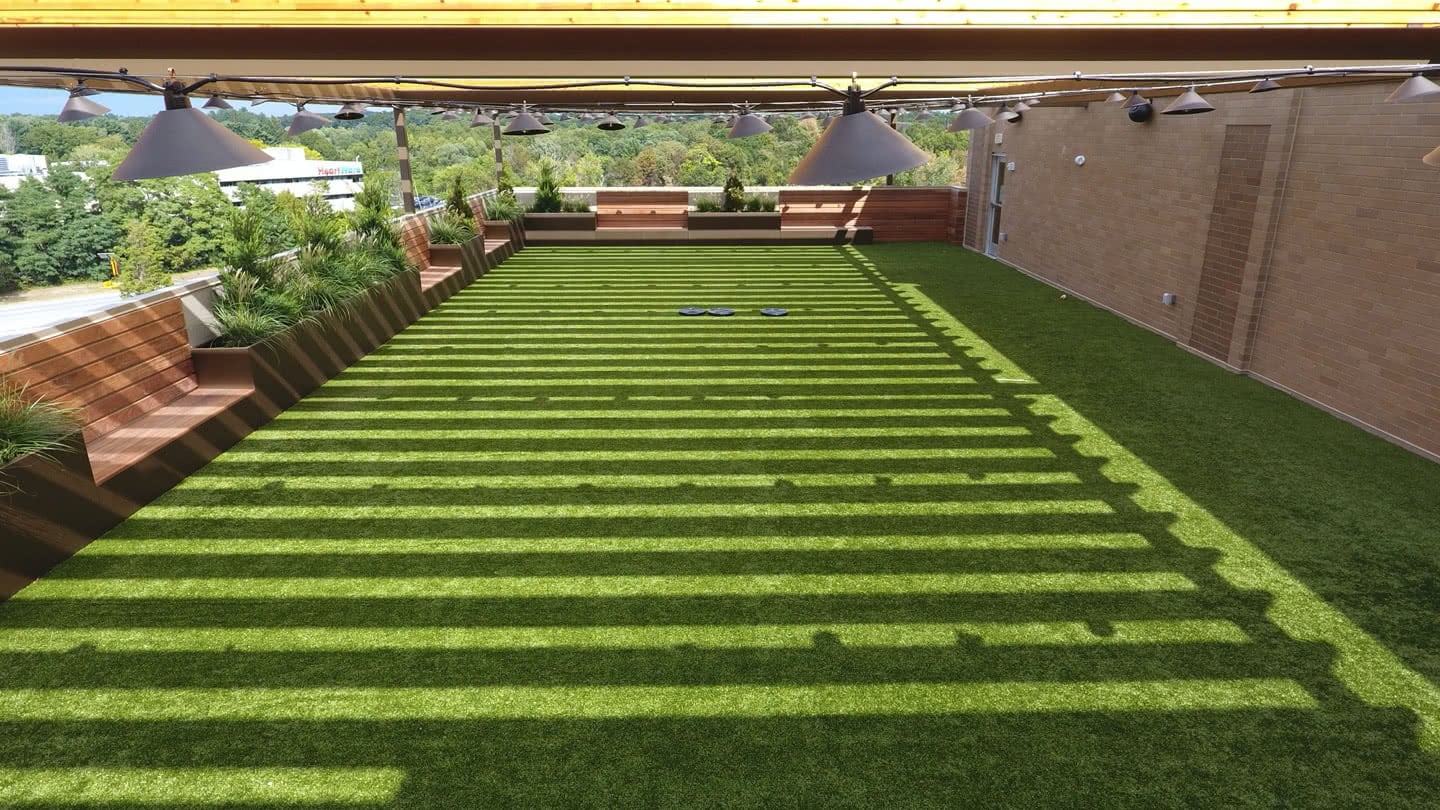
Houston turf service
Rooftop Turf Systems in Houston, TX
Mid-rise buildings along the Westwood corridor, Westchase office towers, and mixed-use developments at the outer loop's urban edges are converting underused rooftop decks to functional green spaces with purpose-built rooftop turf systems.
Service Overview
Rooftop Turf Systems for Houston's Outer-Loop Mid-Rise Buildings
The Beltway 8 corridor's edges — Westwood area mid-rises, Westchase commercial towers, and mixed-use developments along US 290 and I-10 — include a significant stock of rooftop and elevated deck spaces that are either underutilized or carrying concrete and gravel installations that don't support occupant use. Rooftop turf converts these spaces into functional amenity areas: employee break spaces for Westchase corporate tenants, resident recreation areas for outer-loop apartment mid-rises, and event spaces for mixed-use properties.
Rooftop artificial turf installation requires engineering considerations that ground-level residential applications don't involve. Structural load ratings determine what base system the roof can support. Drainage must be designed around existing roof drainage systems without blocking scuppers or drains. Weight distribution matters across large rooftop areas. We assess all of these factors before specifying a system.
The product used on rooftop applications is also different from standard residential turf. Weight matters — lightweight systems are preferred. UV performance across Houston's intense sun exposure is critical on open rooftops with no tree canopy shade. Drainage integration with the existing roof system must be precisely managed. We design rooftop systems around these specific requirements.
Benefits
Rooftop Turf Benefits
Converts Unusable Space to Amenity
Rooftop areas that currently provide no value to building occupants become usable recreation, break, and event space — a direct amenity upgrade for corporate campuses and apartment communities along the outer loop.
Lightweight System Design
Rooftop turf systems are designed for minimal added load — no aggregate base layers required. The system sits on existing roof surfaces and drainage without structural modification.
Roof Protection Benefit
Rooftop turf acts as a UV barrier that extends roof membrane life by reducing direct UV and thermal cycling exposure. This is a meaningful secondary benefit for buildings with aging roof systems.
Year-Round Outdoor Space
Houston's climate supports outdoor rooftop use for most of the year. A finished turf surface makes rooftop spaces usable for morning gatherings, afternoon breaks, and evening events that gravel or bare concrete doesn't support.
Tenant and Resident Satisfaction
Outdoor amenity space drives tenant retention and leasing appeal for commercial and residential properties in the competitive outer-loop leasing market. A finished rooftop adds to the amenity package.
Green Building Contribution
Rooftop green space — even synthetic — contributes to building green metrics, urban heat island mitigation, and the overall sustainability narrative for properties along the Beltway corridor.
Process
Rooftop Turf Installation Process
Structural and Drainage Assessment
We assess the rooftop structural load rating, existing drainage configuration, and surface condition. Building engineering documentation is reviewed before system specification.
Lightweight System Design
We specify a rooftop system appropriate for the load rating and drainage configuration — typically foam or pad underlayment in place of aggregate base, with permeable turf that integrates with existing roof drains.
Drainage Integration Planning
The turf system must never block or impede existing roof drainage. We map drain locations and design the turf layout with drainage clearances and flow paths maintained.
Surface Preparation and Underlayment
Existing rooftop surface is cleaned and any obstacles addressed. Underlayment system is placed and positioned without penetrating the roof membrane.
Turf Installation and Securing
Lightweight turf is placed, cut, and secured using methods appropriate for rooftop applications that don't penetrate or damage the roof membrane. Edge details are managed to prevent wind uplift.
Applications
Rooftop Turf Applications
Corporate Campus Break Areas
Westchase and outer-loop office buildings converting rooftop areas into employee amenity spaces — lunch areas, informal meeting spaces, or wellness zones.
Apartment and Condo Rooftop Amenities
Mid-rise residential properties in the Westwood area and along US 290 and I-10 outer corridors adding rooftop recreation space as a leasing differentiator.
Restaurant Rooftop Dining
Outer-loop restaurant locations with rooftop access converting to seasonal outdoor dining spaces with synthetic turf flooring that handles the Houston spring and fall seasons.
Hotel Rooftop Spaces
Hospitality properties in the Westchase and outer-loop corporate hotel corridor adding rooftop amenity spaces for guest use and event rental.
Event and Venue Spaces
Mixed-use developments and dedicated event venue properties converting rooftop areas to green-surfaced gathering spaces for private events and corporate functions.
Fitness and Wellness Rooftops
Corporate wellness programs and fitness facilities using rooftop synthetic turf for outdoor training areas, yoga spaces, or movement-based programming.
Why This Site Frames It This Way
Why Artificial Turf of Houston for Rooftop Projects
Structural and Drainage First
Rooftop installations that aren't designed around load ratings and drainage configuration create real problems — both for the building and for the building owner. We do the structural and drainage homework before specifying anything.
Roof Membrane Protection
We never penetrate roof membranes for turf securing. All attachment methods are non-penetrating and membrane-safe. Protecting the roof is as important as delivering the turf system.
Lightweight System Expertise
Rooftop systems require different products and installation approaches than ground-level applications. We don't adapt residential systems for rooftop use — we specify rooftop-appropriate systems from the start.
Building Management Coordination
Rooftop access, material handling, and installation on occupied commercial buildings requires coordination with building management, service elevator scheduling, and rooftop access protocols. We manage this coordination.
Wind Uplift Design
Rooftop turf in Houston must be secured against wind uplift. The securing approach varies with the rooftop configuration and prevailing wind exposure. We design edge and anchoring details for the specific installation.
FAQ
Rooftop Turf Questions
How do we know if our rooftop can support turf?
We review building structural documentation during the scoping process. The added load from a lightweight rooftop turf system is typically minimal compared to rooftop HVAC equipment loads, but we verify the available load capacity before specifying the system. We do not proceed without confirming structural adequacy.
Will the turf system affect our existing roof drainage?
Drainage protection is a non-negotiable element of rooftop turf design. We map all existing drain locations, size drain clearance zones in the turf layout, and confirm that drainage flow paths are maintained. The system is designed around the existing roof drainage, not the other way around.
Will it void our roof warranty?
This varies by roof warranty terms and manufacturer. We can provide installation specifications that your roofing contractor or warranty administrator can review. Non-penetrating installation approaches reduce warranty concerns significantly compared to mechanically anchored systems.
How does rooftop turf handle Houston's wind?
Rooftop installations are more exposed to wind than ground-level applications. Edge securing, ballast approaches, and the layout design all address wind uplift risk. Proper edge design is the critical factor — we size and detail this specifically for the rooftop configuration.
Can rooftop turf handle outdoor event use?
Yes, for normal event foot traffic and furniture placement. We discuss the event use intensity during scoping and specify accordingly. Very heavy event loads — for example, large catering equipment or high-density standing events — may need specific weight distribution considerations.
What is the lifespan of a rooftop turf installation?
Rooftop turf experiences more intense UV exposure than ground-level installations and no tree canopy protection. Premium UV-stabilized products with appropriate specifications typically deliver eight to fifteen years of useful life in Houston rooftop conditions.
Service Areas
Rooftop Turf Systems is routed through Houston and the surrounding local pages.
The service template stays tied to the Houston route stack, so supporting city pages and service pages reinforce each other instead of standing alone.
Need a quote for this service?
Activate Your Rooftop Space
Artificial Turf of Houston designs and installs rooftop turf systems for commercial and residential buildings across the outer-loop corridor. Tell us about your building and rooftop space.